Welcome to San Diego Blog | April 10, 2026
New Developments Have Major Impact on Revitalizing Downtown San Diego
The downtown San Diego skyline, historically defined by its proximity to the sparkling Pacific and the legendary silhouette of the USS Midway, is currently undergoing its most significant architectural and economic transformation in decades. At the epicentre of this evolution is the Research and Development District (RaDD), a 1.7-million-square-foot life science and mixed-use campus that is doing more than just adding glass and steel to the horizon—it is fundamentally redefining the lifestyle, vibrancy, and real estate value of the 92101 zip code.
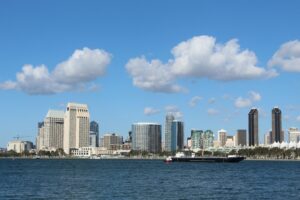
The Waterfront Renaissance: How the RaDD is Redefining Luxury Living in Downtown San Diego
Spanning six city blocks and 10 acres of what is arguably the most valuable urban waterfront real estate in California, the RaDD is a master-planned catalyst. It represents a shift from downtown being a “9-to-5” government and financial hub to becoming a world-class innovation district where the brightest minds in biotech live, work, and play in a seamless urban environment.
New Anchor for Urban Lifestyle and Tourism in Downtown San Diego
For the residents of downtown and the millions of tourists who visit annually, the RaDD serves as the “missing link” that finally connects the sophisticated quietude of the Marina District with the high-energy North Embarcadero. By converting underutilized parking lots and industrial blocks into a high-tech garden city, developer IQHQ has created a destination that prioritizes the pedestrian experience over the automobile.
The Green Lung: Public Spaces and Recreation
The RaDD’s contribution to the city’s “quality of life” metrics begins with its commitment to open space.
-
The 1.7-Acre Park: Centrally located within the district, this green space acts as an urban meadow. For residents of nearby high-rises who lack private yards, this park provides a critical space for recreation, community events, and unobstructed views of San Diego Bay.
-
The Pedestrian Paseo: A curated public artwalk weaves through the district, featuring 18 contemporary artworks. This isn’t just a walkway; it’s a cultural gallery that connects the city’s urban core directly to the water’s edge, encouraging walking and exploration.
Curated Retail and the “New” Downtown Dining
Historically, downtown retail was often criticized for being either too “tourist-centric” or strictly catering to the lunch-break office crowd. The RaDD is breaking this mold by curating “best-in-class” retail and outdoor dining that targets the sophisticated local resident.
-
Lifestyle Brands: Iconic brands like Rivian and The Shade Store have already established a presence in the district as of 2026, signaling a shift toward high-end lifestyle retail.
-
Waterfront Dining: The district’s design features multiple levels of terraces and outdoor seating, allowing diners to enjoy San Diego’s near-perfect climate while overlooking the bay. This adds a level of “nightlife” that is sophisticated and community-oriented, rather than the high-noise environment of the nearby Gaslamp Quarter. Javier’s Mexican Restaurant is under construction.
Impact on 92101 Residential Real Estate: The “Innovation Premium”
The economic gravity of the RaDD is creating a “halo effect” on residential property values throughout the 92101 zip code. By introducing over one million square feet of lab space, the district is attracting a high-earning demographic of scientists, researchers, and tech executives who have historically been forced to commute to Sorrento Valley or La Jolla.
1. Appreciation and Demand
As of early 2026, the 92101 housing market has shown remarkable resilience. While other urban centers have struggled with office vacancies, San Diego’s pivot to life sciences has kept residential demand high.
-
Median Sale Price: The median price for condos and townhomes in the area has stabilized at approximately $763,000, reflecting a steady upward trend as the RaDD nears full activation.
-
Price Per Square Foot: Luxury units in the immediate vicinity of the waterfront are frequently commanding between $1,100 and $1,500 per square foot, driven by the desire for proximity to this new innovation hub.
2. The Demographic Shift
The RaDD is facilitating a transition from an “investor-heavy” market toward an “owner-user” market.
-
Stable Residency: Biotech professionals typically look for long-term primary residences rather than short-term rentals, which leads to more stable, community-focused residential buildings.
-
High Purchasing Power: The high salaries associated with the life science sector provide a strong “floor” for property values, protecting the 92101 market from the volatility seen in more speculative urban areas.
The Proximity Advantage: Park Place and Bayside Condos
For residents of legacy luxury buildings like Park Place(700 W Harbor Dr) and Bayside(1325 Pacific Hwy), the completion of the RaDD is a transformative event that directly enhances their daily lives and asset values.
Park Place: Enhanced Walkability and Value
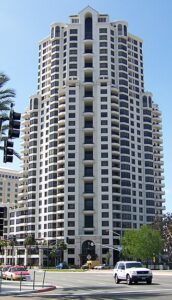
Located just a short walk from the RaDD, Park Place residents now enjoy a significantly improved “walk score”.
-
Access to Amenities: Residents can now bypass the car entirely to access high-end fitness options like Equinox (planned for the area) or the new waterfront dining options at the RaDD.
-
Asset Insulation: The influx of high-net-worth professionals working at the RaDD provides a new pool of potential buyers for Park Place’s expansive, Mission-style residences, ensuring that these homes remain some of the most sought-after in the Marina District.
Bayside :
Front-Row Seats to Innovation
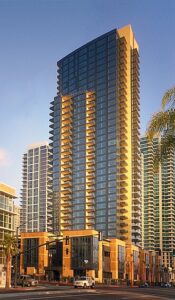
Bayside, known for its sleek modernism and prime location along Pacific Highway, sits on the very doorstep of the RaDD.
-
Neighborhood Vibrancy: Previously, the area immediately surrounding Bayside was dominated by the North Embarcadero Visionary Plan’s open space, which was beautiful but lacked daily utility like retail or dining. The RaDD fills that void, providing Bayside residents with an “urban backyard” filled with amenities.
-
The “Cool Factor”: Being adjacent to the most advanced life science campus on the West Coast adds an intangible “prestige” to Bayside, appealing to a younger, tech-savvy generation of luxury buyers.
Sustainability and the Future of the City
The RaDD isn’t just about economic growth; it’s a blueprint for a sustainable San Diego.
-
Eco-Friendly Infrastructure: The district features one of the largest electric vehicle charging infrastructures in the region and utilizes 100% renewable energy for its operations.
-
The Transit Link: By being situated near the Santa Fe Depot and the Trolley lines, the RaDD encourages a car-free lifestyle for residents of 92101, further reducing the carbon footprint of the downtown core.
The Challenge: A World-Class Urban Core
Chad’s Pespective – While everything you’ve just read is theoretically what should have played out for the RADD development, sadly this is not exactly how things have unfolded. First off, the office buildings remain empty and the developer is taking a huge loss on the project. The retail spaces are taking much longer to lease out than anticipated so the paseo, while very nicely designed, feel like an abandoned village. The beautiful 1.7 acre park is often filled with homeless people and is not bustling with life of downtown residents or employees from the office towers (the would be employers don’t yet exist). This is an example of, “If you build it, they will come” that has gone wrong, at least for the near term.
While there is so much future opportunity for Downtown San Diego real estate and lifestyle, it will take a radical shift in goverment policies and ideologies to tackle the homeless issues and make downtown safe and vibrant again.
To learn more about downtown San Diego Real Estate, visit us online at www.welcometosandiegorealestate.com

Written by: chad
Categories: Downtown San Diego, Luxury San Diego Condos, Marina District Real Estate, New Developments